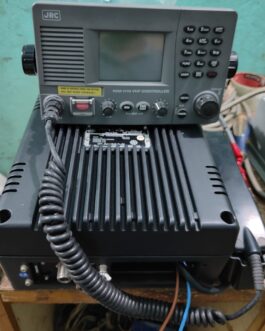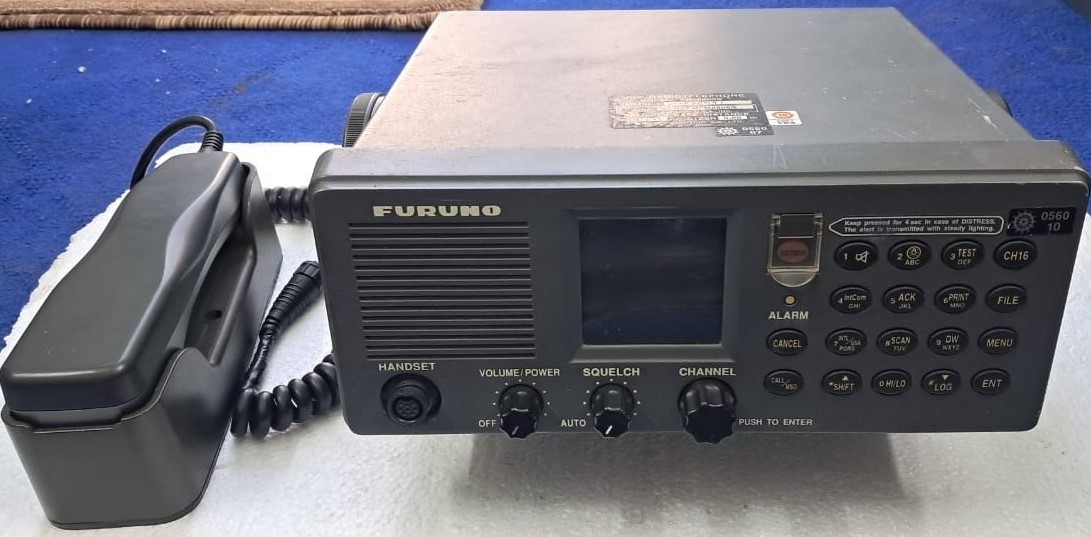
The Furuno FM-8800S is a fixed marine VHF radiotelephone used on commercial vessels for ship-to-ship and ship-to-shore communication, including safety and distress communication. It combines three functions in one unit: VHF voice radio + Class-A DSC + dedicated Channel 70 watch receiver.
Main functions of FM-8800S
- Marine VHF voice communication
- Used for normal communication between ships and between a ship and shore stations.
- The FM-8800S is a 25 W VHF radio and supports simplex/semi-duplex communication.
- Channel 16 can be accessed quickly for distress, safety and calling purposes.
- DSC – Digital Selective Calling
- The built-in Class-A DSC modem allows the vessel to send and receive digital calls.
- It can handle distress, urgency, safety and routine calls.
- Calls can be directed to an individual vessel, all ships, or groups.
- Continuous Channel 70 monitoring
- Channel 70 (156.525 MHz) is the DSC channel.
- The FM-8800S has a dedicated watch receiver that continuously monitors CH70, even when the operator is using another VHF channel.
- Incoming DSC calls generate audible and visual alarms.
- Distress communication
- It can be used to transmit and receive DSC distress alerts.
- This is particularly important for the vessel’s GMDSS safety communication system.
- Dual Watch / Multiple Watch
- The radio can monitor CH16 and another selected channel simultaneously.
- Multiple-watch functions allow monitoring of selected channels for operational and safety communications.
- GPS position and time input
- When connected to the vessel’s GPS/navigation equipment, the FM-8800S can automatically receive the vessel’s position and time.
- This information is important when sending DSC distress alerts.
- Connection with other ship equipment
- It can interface with equipment such as VDR (Voyage Data Recorder) and printers.
- Remote handsets/remote stations can also be connected in suitable installations.
In simple terms
FM-8800S = Ship’s VHF communication + DSC distress calling + CH70 continuous monitoring.
It is normally installed on the bridge/navigation console and is used by the crew to communicate with nearby ships, coast stations, port authorities and other marine services, while also providing an important GMDSS safety/distress communication function.